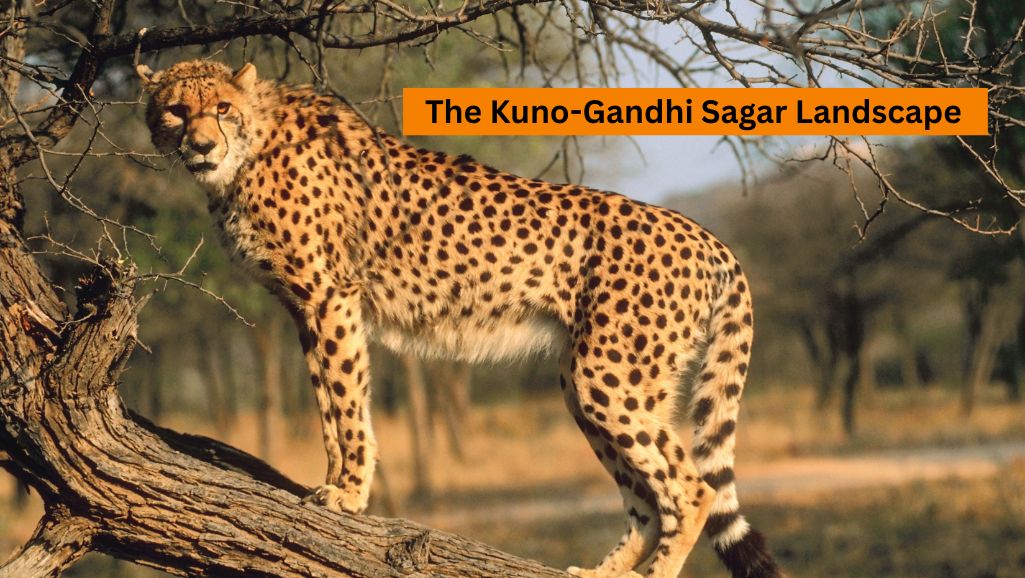
Cheetahs released under Project Cheetah frequently venture out of Kuno National Park in Madhya Pradesh (MP) into neighbouring Rajasthan, driven by their natural instinct to explore and claim new territory. Because political and administrative boundaries do not exist in wildlife ecology, forest officials regularly tranquillise and return these big cats to MP to prevent potential human-wildlife conflict.
Initial Translocation: Project Cheetah began with 20 cheetahs imported from Namibia and South Africa, followed by 9 from Botswana.
Current Population: Kuno’s total cheetah population has grown to 53, including 33 cheetahs born in India.
Free-Ranging Status: 17 cheetahs currently roam free outside enclosures.
Border Crossings: Since late 2022, cheetahs have crossed into Rajasthan on at least 11 occasions, triggering 8 tranquillisation operations.
KP-2 (India-born male): Has strayed more than any other cheetah, requiring multiple captures:
December 2025: Tranquillised in Baran.
March 2026: Tranquillised near Kota after roaming Rajasthan for 55 days.
May 2026: Tranquillised in the Phalodi range of Ranthambore Tiger Reserve.
KP-3 (India-born male): Spent roughly 42 days moving through Baran and Jhalawar before being captured near the MP border.
Instinctive Behaviour: Retired forest official Daulat Singh explains that young males in particular travel hundreds of kilometres outside their natal ranges seeking prey and space to establish their own territories.
Total Area: The broader contiguous landscape spans approximately 17,000 sq km.
Madhya Pradesh Share: ~10,500 sq km.
Rajasthan Share: ~6,500 sq km (covering districts such as Baran, Kota, Jhalawar, Karauli, Sawai Madhopur, and Chittorgarh).
Habitat Suitability: Experts note that long periods spent by cheetahs in Rajasthan prove the regional habitat, scrubland, and prey base satisfy their ecological needs.
“It is prudent initially to tranquillise cheetahs and bring them back to Kuno whenever necessary, as the park has more established infrastructure…”
— Sanjay Kumar Pathak, Member-Secretary, NTCA
Stalled MoU: MP and Rajasthan have drafted a Memorandum of Understanding (MoU) for joint monitoring, shared research with the Wildlife Institute of India (WII), and cross-state management protocols under the Wildlife Protection Act, 1972. However, official signing remains pending.
Ecological vs. Management Goals: While officials use tranquillisation as a standard precautionary measure near human settlements, wildlife experts advocate for a unified landscape strategy that permits natural dispersal and genetic exchange without frequent human intervention.